

Where is Uzbekistan?
This was the first question I asked myself.
Located in Central Asia, Uzbekistan is predominantly bordered by Kazakhstan that sits above in the north. It’s also centered between Kyrgyzstan, Tajikistan, Afghanistan and Turkmenistan. It’s one of only two double landlocked countries in the world, meaning each of its neighbours are also surrounded by land.
Once part of the Soviet Union, Uzbekistan only became independent in 1991. You’ll still spot remnants of its Soviet past in the brutalist buildings and older metro carriages — but they sit side by side with ancient Islamic architecture and modern infrastructure. Its long history as a Silk Road trading hub means it’s always been a cultural melting pot, and that eclecticism is very much alive today.

How to travel to Uzbekistan
Uzbekistan is surprisingly accessible, with direct flights available from most major European capitals. The flight time from London to Tashkent International Airport is just under 7 hours, or you can head to Samarkand on a non-direct flight in 9+ hours.
I booked direct flights with Uzbekistan Airways from London Heathrow at just over £800. But prices start from just £350 — especially if you’re happy to book a non-direct flight.
Once you’re in Tashkent, the best way to get from place to place is by train. Uzbekistan’s railway system is part of its charm. Cheap, clean and with plenty of complimentary snacks, it puts the National Rail to shame.
The high-speed Afrosiyob trains connect major cities like Tashkent, Samarkand and Bukhara in a few hours, making multi-city trips super easy to manage. Just book in advance, as they do fill up.
You can also hire a car, or hop in shared taxis — a popular, slightly chaotic but cost-effective option if you’re feeling adventurous.

How long do you need in Uzbekistan?
I saw Tashkent, Samarkand and Bukhara in 6 days. Although it was a busy trip with a fair few early starts — so if a spot of relaxation is important to you, I’d recommend at least 8. More if you want to explore further along the Silk Road or head east to the Fergana Valley.
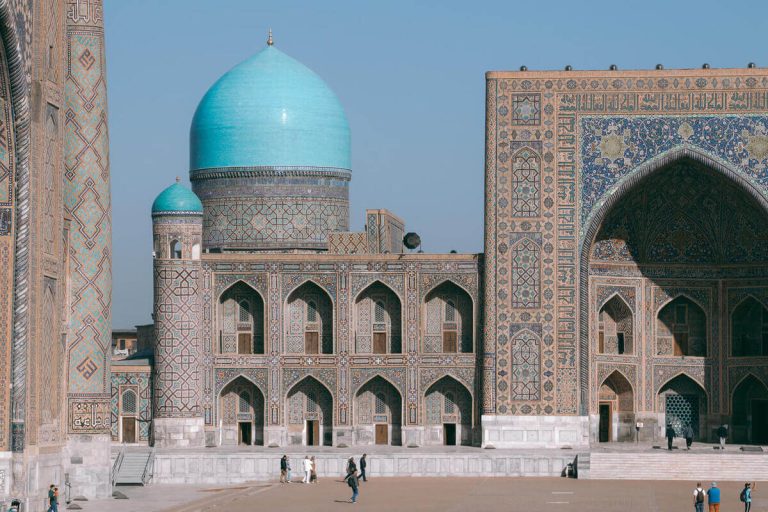
The cities are fairly walkable and well connected, but give yourself breathing room to actually enjoy them rather than rushing from one tile-clad dome to the next.

What is Uzbekistan cuisine?
Uzbekistan food isn’t a top reason to visit. Sure, some dishes were delicious — notably plov (a hearty rice dish with lamb and carrots) and a few meaty dumplings. But the meat-heavy, oily dishes can get repetitive. Vegetarians may also find the options more limiting beyond the fresh bread, soup and salads.
Still, it’s worth trying traditional lagman noodles, samsa (meat-stuffed pastries), and shashlik kebabs. Do say yes to the tea — it’s served everywhere and always hits the spot.


What is the currency in Uzbekistan?
The official currency is the Uzbek soʻm (UZS). One British pound gets you a stack of notes — and I mean a stack. Uzbekistan has a lot of zeros. One ten pound note can translate to 150,000+ soʻm, so make sure to pack a big wallet.
It’s one of the more confusing currencies I’ve used, so keep a currency converter handy. You’ll feel like you’re spending Monopoly money, but it’s actually a seriously cheap country. Think £8 for a full dinner with wine, around £1 for a metro ride, and even less for a cuppa.
That said, souvenir markets — especially in touristy spots — are on the pricier side. But worth it for the craftsmanship.

What is the language in Uzbekistan?
The official language is Uzbek, which uses a Latin-based alphabet. Russian is also widely spoken, especially among older generations. In cities and tourist hubs, you’ll find English speakers here and there, particularly in hotels or guided tours.
Google Translate with offline Uzbek downloaded is your best friend. And a quick “rahmat” (thank you) goes a long way.


Other things to do in Uzbekistan
Shopping
Aside from ogling at buildings, there are also plenty of lovely markets to wander through. This is where the country makes its money from tourists, but the goods are worth it.
From giant silk rugs to handsewn overcoats, textiles are a core part of Uzbekistan’s identity — along with pottery, paper and jewellery. I came home with a wall hanging, a doormat, a traditional vase and a paper doll that now hangs proudly on my Christmas tree. Top tip: pack a roomy case.


Hammam Spa
Like many countries in the region, Uzbekistan has a long tradition of hammam (bathhouse) culture — steam, scrub, soak, repeat.
All I’ll say is: do your research before popping in. My ‘full body treatment’ in Bukhara was… thorough. Not one I’d sign up for again, but it gave me an excellent story to tell when I got home.
Want to know more? Read about my medieval hammam experience in Bukhara.
Travel the Silk Road
Uzbekistan lies at the heart of the Silk Road, the ancient network that connected the East and West. You’ll see the influences everywhere — from Chinese ceramics to Persian design.
For fellow train lovers, this country is a dream. Hop from city to city in comfort and watch the golden steppe unfold out the window, dotted with shepherds and low-slung mountains.


Hiking
While my trip was more about architecture and cities, Uzbekistan is also home to beautiful mountains and valleys. The Chimgan Mountains, just a couple of hours from Tashkent, offer hiking and skiing in season. The Nuratau Mountains are great for trekking and homestays in traditional villages.
If you’ve got longer, the Fergana Valley region in the east is known for fruit orchards and handicrafts — a real off-the-beaten-path gem.

Experience the Tashkent Metro
Normally a metro system wouldn’t make it onto a ‘top things to do’ list, but Tashkent’s underground is an exception.
Each station is uniquely designed, with themes ranging from space exploration to Uzbek folklore. Think chandeliers, mosaics and marble columns — part transport, part art gallery. It was originally built as a nuclear bunker during the Soviet era, so it’s deep and sturdy.
We spent an entire afternoon hopping on and off, guessing what the next station theme would be. Cheap, beautiful and delightfully nerdy — just how I like my public transport.
Kyzylkum Desert
One thing I didn’t manage to fit in — but would go back for in a heartbeat — is sleeping in a yurt in the Kyzylkum Desert. Tucked between Samarkand and Bukhara, this vast stretch of sand dunes is a world away from Uzbekistan’s ornate cities.
A typical stay includes a night in a traditional felt yurt, dinner by the fire, and stargazing under skies, with the chance to ride camels too.
Uzbekistan surprised me at every turn — with stunning architecture, fascinating history, and warm, friendly faces at every turn. Whether you’re wandering the vibrant bazaars, exploring ancient madrasas, or dreaming of sleeping under the stars in a desert yurt, this is a destination that stays with you long after you leave. If you’re looking for a travel experience that feels fresh and a little unexpected, this should be on your radar.