
Note: this guide to Huacachina contains affiliate links. Thank you for the support!
When I began planning trip to Peru, I was overwhelmed by the vast array of landscapes contained within one country; Cusco’s chilly mountains, Puerto Maldonado’s sticky Amazonian climate, and Lima’s fresh coastal city. But one that stood out was Huacachina, a tiny oasis smack bang in the middle of the desert.
Huacachina is a small village in southwestern Peru, less than 30 minutes from the city of Ica. It’s the only natural oasis in South America and regarded as one of the world’s most impressive places to visit. The name translates to “weeping woman,” a nod to the legend of an Incan princess whose tears formed the lagoon. Today, only around 100 people live here – yet thousands of travellers pour in every year, lured by the promise of sandboarding, dune buggies and those iconic desert sunsets.
I’m normally put off by overly touristy locations. But I couldn’t swipe left on this one. We all know I love a weird place (hello Salvation Mountain) and Huacachina was too surreal to skip.


Getting from Lima to Huacachina
Thanks to Peru Hop, I found a way to see Huacachina and the surrounding area without the stress of logistics. The hop-on, hop-off travel company is known as a convenient way to get around Peru, Bolivia and other South American countries. But they also provide day trips and tours that make seeing places like Huacachina extremely easy. Particularly for a solo traveller like myself.
For $270, I booked on to the 2 day tour from Lima, including a tour of the Ballestas Islands in Paracas, an overnight stay in Huacachina, and a flight over the Nazca Lines. Plus hotel pick up and drop offs. Overall, it was a fantastic experience. I felt safe, cared for, and met some wonderful fellow travellers along the way. The Nazca Lines flight wasn’t my bag (I pretty much prayed for it to be over the entire time), but it was optional, and others loved it.
At 5:45am, I was collected from my hostel in Miraflores and whisked into a minivan, before being grouped with other sleepy travellers onto a coach. Within minutes, we were on the Pan-American Highway heading south.
The drive from Lima to Paracas takes about four hours – and while that sounds long, it’s the perfect chance to nap before the fun begins.


Paracas: the Poor Man’s Galapagos
Paracas is a quiet beach town — not the prettiest in Peru, but it serves as a great base for exploring the coast. There are a handful of good restaurants and a relaxed seafront, but most visitors come here for two reasons: the Paracas National Reserve or a boat trip to the Ballestas Islands.
The latter was my chosen option. With the Galapagos dubbed the “Poor Man’s Galapagos,” the Ballestas Islands are teeming with wildlife. And this Poor Woman definitely got her money’s worth.
On the two-hour boat ride, we zipped past desert cliffs and floating docks covered in sea lions, spotted Humboldt penguins hopping into the surf, and watched seabirds circle the sky — pelicans, boobies, cormorants and more. Lucky folk might even see dolphins.


The tour also passes the Paracas Candelabra, a massive geoglyph etched into the hillside, eerily similar to the Nazca Lines and just as mysterious. Was it for rituals, water worship, or something else entirely? No one really knows.
TBTL Tip: Peru Hop offers a group lunch stop in Paracas, but I’d recommend skipping it. These tour lunches can feel a bit hit-and-miss. Instead, I wandered the seafront and tucked into a delicious Lomo Saltado overlooking the ocean. A few people from my group came back wishing they’d done the same.


Huacachina: a desert oasis
After Paracas, it’s just over an hour’s drive to Huacachina. Arriving feels chaotic at first: coaches, hostels, and tourists everywhere. My first impression? Honestly, a bit underwhelming. But then I caught my first glimpse of the lagoon, framed by towering dunes, and all doubts melted away.
Dune buggy rides
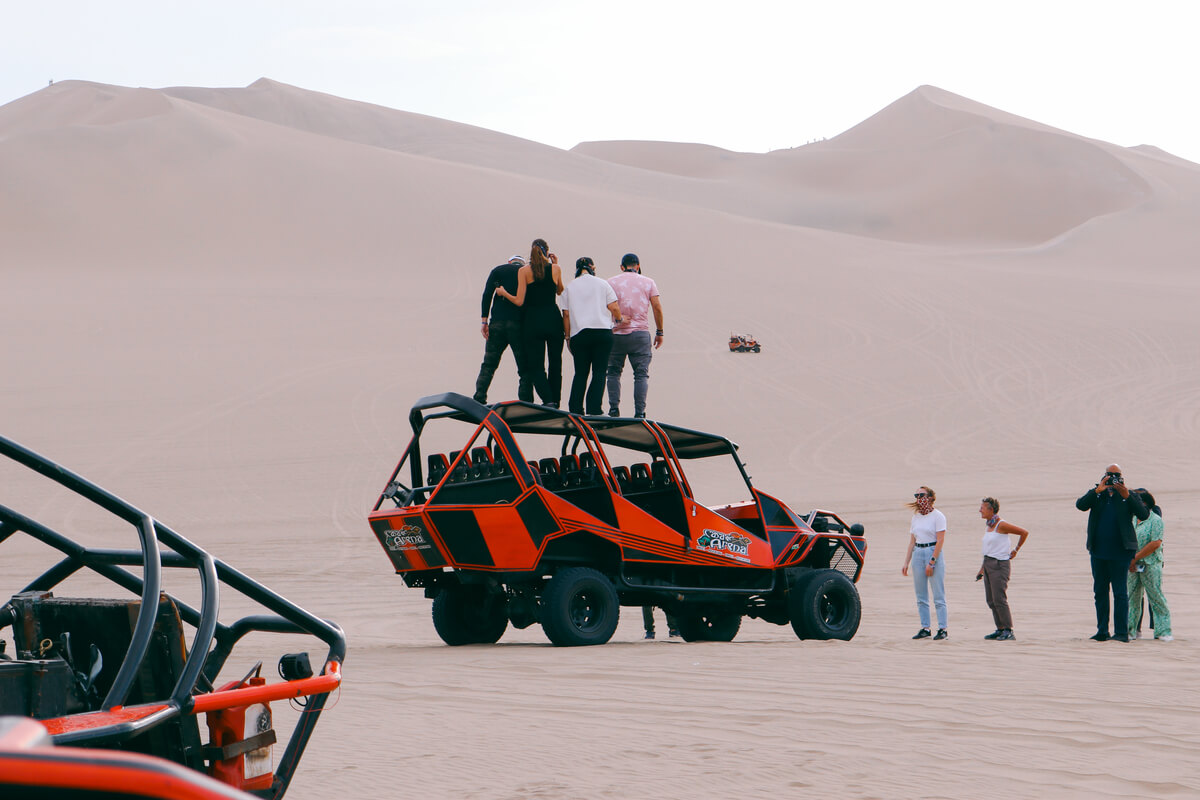
The main draw here is the dune buggy tours. And whilst you can walk up the dunes to get a good view, this is also the easiest route. I’ll admit I was nervous — not ideal when motion sickness and adrenaline don’t always mix. But with travel sickness patches on and a new friend by my side, I braved it.
Our driver promised to “go easy.” Whether he listened or not, I’ll never know, but flying over the dunes at speed was an absolute thrill. Wind whipping through the open buggy, sand blurring past – our car was screaming and laughing in equal parts.


Sandboarding
Stopping off on the dunes, it was time for sand boarding. Now I won’t lie, I wasn’t really feeling this. I used to be such an adventurer – saying yes to anything. But whether it’s because this was my first solo travel experience in a while, or simply because I’m no longer a twenty-something without a care in the world – I wasn’t feeling so brave.
And it didn’t look easy. You quite literally had to dive in head first, holding on to the board and lifting your feet until the exact moment you wanted to slow down. Watching others fling themselves down near-vertical dunes didn’t exactly calm my nerves. I sat out the first run.

But then I saw a couple in their 60s launch themselves down without hesitation. That was it. I couldn’t let the fear win. So off I went, screaming behind my scarf as I ploughed down the dune — and it was pure joy. A wilder version of childhood tobogganing. Terrifying, exhilarating, but unforgettable.
The more experienced can also go sand surfing or skiing – wow.


Sunset over the sand dunes
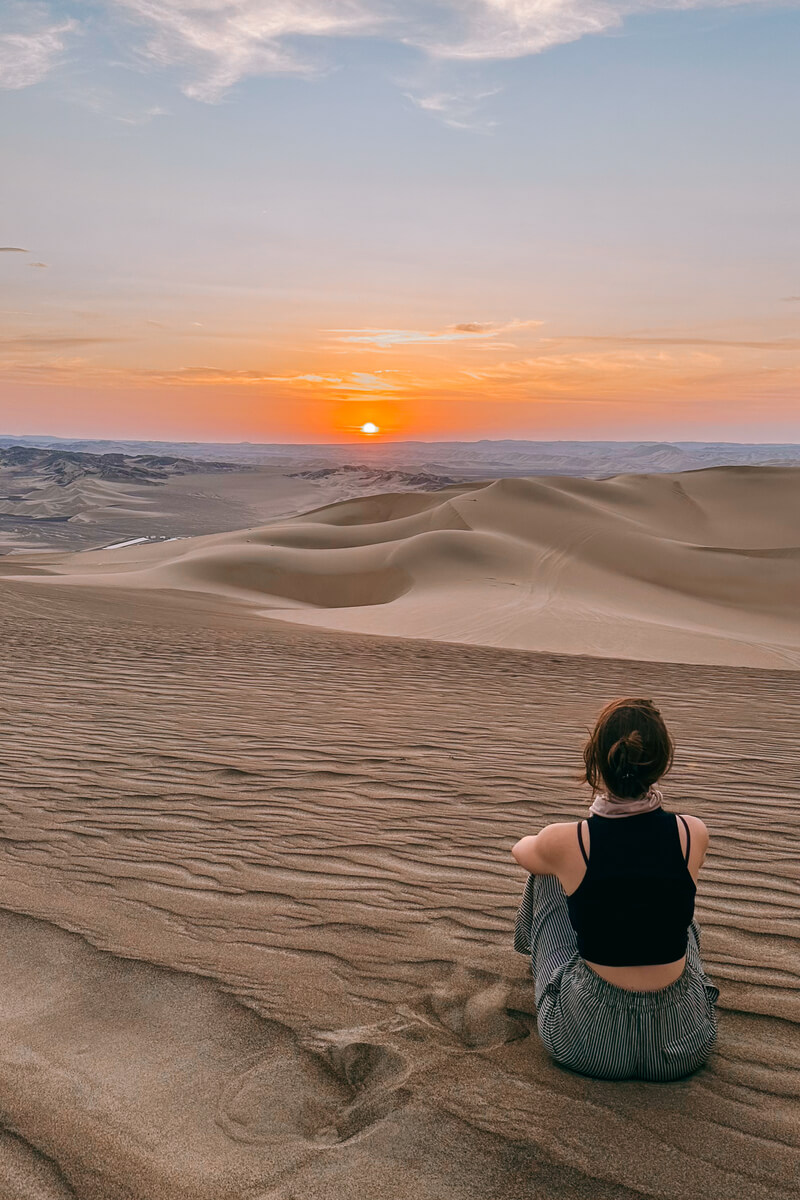
After all the adrenaline, things slowed down. Our group parked up on the dunes to watch the sun melt over the desert. Changing the sky into a romantic soft pink, the lights of Huacachina town sparkling below.
That evening I strolled through the lagoon, wandering around the many restaurants and soaking up the view before tucking in for an early night.

FAQs about Huacachina and Paracas
Where should you stay in Huacachina?
There aren’t loads of options, but the hostels and hotels here cover most budgets (around £12–£65 per night). Peru Hop can arrange stays at partner properties, but I skipped the party vibes of Wild Rover and booked at Viajero Kokopelli Huacachina Hostel instead. It had great food, comfy beds, and the best doggie friends.
What should you wear to go sandboarding in Huacachina?
Long sleeves are encouraged to avoid any sand or wind whipping. The real essentials, though, are sunglasses and a scarf or bandana to cover your face during the buggy and sandboarding rides. You do not want that in your mouth.
How far is Huacachina from Lima?
The drive from Lima to Huacachina is around 4 hours 45 minutes. Breaking it up with a stop in Paracas makes it much easier.
When is the best time to visit Huacachina and Paracas?
I visited in October, which was perfect — mild weather, shoulder season, and still lively without being overwhelming. Summers (December–February) get busier and hotter.