
Is 10 days in Tokyo too long?
Ten days in Tokyo is not too long, especially for first-time visitors who prefer to travel slowly. It gives you enough time to explore Tokyo’s major neighbourhoods, visit museums and markets, enjoy two days at Disney and still leave space for spontaneous discoveries.
Many people spending two weeks in Japan allocate four or five days to Tokyo before continuing to Kyoto, Osaka or Hiroshima. That works for a broader Japan itinerary, but Tokyo could easily fill the entire fortnight.
With 10 days, you don’t have to choose between old and new Tokyo, or visit an attraction simply to take a photograph before sprinting back to the station. You can spend an afternoon browsing department-store food halls, return to a neighbourhood you particularly loved and sit down for dinner rather than eating every meal on the move.
Your 10-day Tokyo itinerary at a glance
| Day | Area | Main experiences |
|---|---|---|
| 1 | Arrival and hotel area | Narita transfer, check-in and an easy local dinner |
| 2 | Toyosu and Odaiba | teamLab Planets, waterfront views and futuristic Tokyo |
| 3 | Harajuku and Omotesando | Meiji Shrine, shopping, street food and Tokyo Tower |
| 4 | Asakusa and Akihabara | Sensō-ji, kitchenware, gaming and street karting |
| 5 | Tsukiji, Ginza and Chiyoda | Fish market breakfast, food halls, parks and the Imperial Palace |
| 6 | Kichijoji and Mitaka | Ghibli Museum, Inokashira Park and a slower local neighbourhood |
| 7 | Shibuya and Shinjuku | Shibuya Crossing, skyline views, gardens and nightlife |
| 8 | Tokyo DisneySea | Disney’s most unique park |
| 9 | Tokyo Disneyland | Classic Disney with plenty of Tokyo quirks |
| 10 | Departure | Airport hotel, Narita or a final neighbourhood breakfast |


When is the best time to visit Tokyo?
The best time to visit Tokyo depends on whether you value mild weather, seasonal scenery or lower prices.
Spring
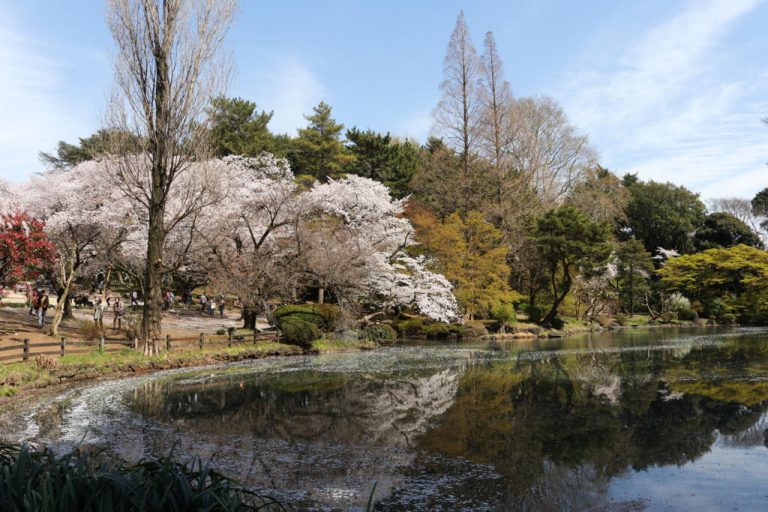
We visited during cherry-blossom season, which aligned neatly with the UK Easter holidays. Seeing the city covered in sakura was genuinely special, particularly during our picnic in the park, but blossom dates are difficult to predict and accommodation can be expensive.
I wouldn’t pay an enormous premium solely to chase the blossoms. They are lovely, but Tokyo offers more than enough without them.
Spring weather is also mixed. Some days were mild and bright, while a couple of our Disney days were cold, rainy and far less spring-like than the photographs suggested! Pack layers and a waterproof jacket.
Autumn
Autumn is one of the most appealing alternatives, bringing cooler temperatures and colourful foliage. October and November are often easier for walking than humid midsummer, although popular dates still book quickly.
Summer
Tokyo summers are hot and humid. Indoor attractions, evening activities and frequent breaks become essential, particularly in July and August.
Winter
Winter can be cold but relatively dry, with illuminations, fewer crowds and the chance of clear views towards Mount Fuji. It’s a strong option if seasonal flowers aren’t important to you.

Where is the best area to stay in Tokyo?
There is no single best area to stay in Tokyo if you want to see everything. The city’s attractions are spread across multiple districts, so proximity to a main train or subway station matters more than being near one particular landmark.
For a first visit, I’d choose Ueno or Asakusa for better-value hotels and easy access to Narita airport, as well as Shinjuku or Shibuya for nightlife and transport connections, or Ginza and Tokyo Station for a more polished, central base. Staying in one hotel for the city portion of your trip is completely manageable; we did this and travelled everywhere by train.
I’d only move hotels when heading to Tokyo Disney Resort, where staying nearby makes early starts and late finishes far easier. We stayed at Hilton Tokyo Bay and I’d highly recommend it. It had a super quick shuttle to the park and beautiful views of Mount Fuji.
Ueno and Asakusa: best for value, temples and Narita access
Ueno and Asakusa sit in the more traditional north-eastern side of Tokyo. Asakusa gives you Sensō-ji temple, market streets and an older-city atmosphere, while Ueno has museums, Ueno Park, Ameyoko shopping street and direct Skyliner services from Narita Airport.
This is one of the best areas to stay in Tokyo if you want more affordable accommodation without feeling disconnected from the city. It is quieter than Shibuya or Shinjuku at night, but well connected for sightseeing.
Where to stay in Ueno and Asakusa
- APA Hotel Asakusa Tawaramachi Ekimae (budget): A simple, compact base with strong subway connections and an on-site public bath.
- NOHGA Hotel Ueno Tokyo (mid-range): A design-led hotel with a calmer, more considered atmosphere than many chain properties.
- The Gate Hotel Kaminarimon by Hulic (upper mid-range/luxury): Stylish rooms and a terrace overlooking the Asakusa skyline, close to Sensō-ji.
Find more places to stay in Ueno and Asakusa.


Shinjuku: best for transport and nightlife
Shinjuku is loud, bright and relentlessly busy. It’s home to enormous train stations, neon-lit Kabukicho, the tiny bars of Golden Gai and the Tokyo Metropolitan Government Building, where you can look across the city from the observation decks.
Its transport connections make it a practical base for day trips and neighbourhood-hopping, although staying beside the world’s busiest station can feel intense. Choose a hotel on the quieter western side if you want easier evenings.
Where to stay in Shinjuku
- Sotetsu Fresa Inn Higashi Shinjuku (budget): Straightforward rooms with direct subway access and lower prices than many central Shinjuku hotels.
- Hotel Gracery Shinjuku (mid-range): Famous for its giant Godzilla head and an excellent base for exploring Kabukicho.
- Park Hyatt Tokyo (luxury): An iconic skyline hotel known for its cinematic views, polished interiors and feature in the film Lost in Translation.
Find more places to stay in Shinjuku.
Shibuya: best for first-time energy and late nights
Shibuya offers the Tokyo many first-time visitors imagine: enormous screens, rushing crowds, fashion stores and restaurants stacked vertically into seemingly every building.
It’s brilliant if you want to be surrounded by action and walk back from dinner or drinks. Shibuya is also close to Harajuku, Omotesando and Daikanyama, making it particularly good for foodies and shoppers.
Where to stay in Shibuya
- The Millennials Shibuya (budget): A modern capsule-style hotel with larger sleeping pods and social spaces.
- sequence MIYASHITA PARK (mid-range): Contemporary rooms above a shopping and dining complex between Shibuya and Harajuku.
- Cerulean Tower Tokyu Hotel (luxury): Spacious rooms, excellent service and sweeping city views away from the busiest streets.
Find more places to stay in Shubuyu.


Ginza and Tokyo Station: best for food, shopping and a polished stay
Ginza and the Tokyo Station area suit travellers who want department stores, refined restaurants and fast connections across the city. The neighbourhood feels calmer and more polished than Shinjuku, although hotel prices can be higher.
This is an especially good base for food lovers. The underground depachika food halls are filled with immaculate sushi, pastries, bento boxes and gifts, while Tsukiji, Hibiya Park and the Imperial Palace are within easy reach.
Where to stay in Ginza and Tokyo Station
- remm Tokyo Kyobashi (budget): Compact contemporary rooms between Ginza and Tokyo Station.
- Mitsui Garden Hotel Ginza Premier (mid-range): Sleek accommodation with high-floor views and a convenient Ginza location.
- Mandarin Oriental Tokyo (luxury): A major honeymoon or special-trip splurge with exceptional dining and views across Tokyo.
Find more places to stay in Ginza and near Tokyo Station.
Tokyo Bay and Maihama: best for Tokyo Disney Resort
Tokyo Disney Resort is technically in Urayasu, Chiba, rather than central Tokyo. You can commute from the city, but staying around Maihama or Bayside Station makes a two-day Disney visit far easier.
We stayed at Hilton Tokyo Bay and I’d happily recommend it. It was much cheaper than the Disney-owned hotels, connected to the parks by the Disney Resort Line and gave us an incredible view towards Mount Fuji when the sky was clear.
Where to stay near Tokyo Disney Resort
- ibis Styles Tokyo Bay (budget): A colourful, family-friendly option with shuttle transport to the resort.
- Hilton Tokyo Bay (mid-range): Where we stayed. Spacious rooms, quick access to the monorail and the chance of Mount Fuji views from bay-facing rooms.
- Tokyo DisneySea Hotel MiraCosta (luxury): The dream option for Disney fans, located inside Tokyo DisneySea with themed interiors and park views.
Looking for more accommodation? Find the best hotels near Tokyo Disney and DisneySea on Booking, Expedia or Hotels.com.


10 day Tokyo itinerary
Day 1: Arrive in Tokyo and take it slowly
Most international visitors arrive through Narita or Haneda Airport. We flew into Narita and took the Keisei Skyliner to Ueno before continuing by subway to our hotel. You can also book a private airport transfer here.
The Skyliner is a particularly convenient choice if you’re staying around Ueno or Asakusa. The Narita Express may work better for Tokyo Station, Shibuya or Shinjuku, while airport buses serve many major hotels.
Once you’ve checked in, resist the urge to begin sightseeing immediately. Pick up an IC transport card (Suica or PASMO) for easy travel on Tokyo’s trains and metro throughout the week.
Your first dinner doesn’t need to be a famous reservation. Find a nearby ramen shop, casual izakaya or conveyor-belt sushi restaurant and let the city introduce itself slowly.
If you’ve arrived early enough and still have some energy, spend the evening stretching your legs around Ameyoko Shopping Street where you can grab your first bowl of ramen and browse the lively market stalls.
Getting online when you arrive
An eSIM makes those first few hours significantly easier. You can message your accommodation, check train routes and use Google Maps without relying on airport Wi-Fi.
I install mine before leaving the UK and activate it once I land. Read my honest Sim Local review and use my discount code before choosing a Japan or regional Asia plan.
Sign up to Sim Local using code TRAVELBETWEEN for an exclusive discount!

Day 2: teamLab Planets and futuristic Tokyo Bay
Begin your first full day at teamLab Planets in Toyosu. This immersive digital-art museum takes you through mirrored spaces, gardens and water-based installations. Timed tickets should be booked in advance.
Wear clothes that can be comfortably rolled above the knee, as several installations involve walking through water. Some mirrored floors also make short skirts less practical.
From Toyosu, continue to nearby Odaiba for a relaxed afternoon beside Tokyo Bay. Odaiba feels markedly different from the tightly packed centre: wide pavements, waterfront views and large entertainment complexes give the area a more open, futuristic atmosphere.
Begin at DiverCity Tokyo Plaza, home to the life-sized Gundam statue that transforms throughout the day with light shows. It’s also one of the easiest places to grab lunch, with dozens of restaurants and cafés inside. From there, explore the nearby waterfront.
Choose the attractions that suit you rather than attempting all of them. Options include:
- The National Museum of Emerging Science and Innovation
- Shopping and arcades inside DiverCity and DECKS Tokyo Beach
- The replica Statue of Liberty
- Odaiba Seaside Park
- Rainbow Bridge views after dark
- Fuji Television’s distinctive headquarters
- A day or night cruise of Tokyo Bay on a traditional yakatabune
For a modern hot-spring experience nearby, look at Toyosu Senkyaku Banrai and the Tokyo Toyosu Manyo Club.
End the day with dinner at DECKS, Aqua City or DiverCity. You’ll find everything from Japanese comfort food to themed restaurants, with several places overlooking Rainbow Bridge.


Day 3: Harajuku treats, Meiji Shrine and Tokyo Tower
Harajuku is where shrine paths, fashion stores, rainbow-coloured snacks and quiet residential streets somehow sit side by side.
Start at Meiji Shrine before the busiest shopping streets fill up. The forested approach feels astonishingly peaceful given its location between Harajuku and Shibuya. Take your time walking through the grounds rather than treating the shrine as a quick photo stop.
From there, explore Harajuku and Omotesando. My original day here turned into something of a snack crawl, which is still one of the best ways to experience the area.
Look out for:
- Japanese-style crepes along Takeshita Street
- Takoyaki, filled with pieces of octopus
- Giant rainbow candyfloss
- Tonkatsu sandwiches
- Luke’s Lobster for buttery lobster rolls
- Japanese pancakes and seasonal desserts
Shopping highlights include Kiddy Land, Daiso, Tokyu Plaza Omotesando, Cat Street and the Design Festa Gallery. The free gallery is one of the more interesting breaks from commercial Harajuku, with a constantly changing collection of work from independent artists.
In the late afternoon, travel to Tokyo Tower. Book a timed observation ticket for shortly before sunset so you can see the city shift from daylight into neon.
Stay nearby for dinner or eat inside the tower complex. Tsurutontan is a good option if you want enormous bowls of udon served in equally enormous dishes.


Day 4: Asakusa, Tokyo Skytree and Mario Kart through Shibuya
Start the morning in Asakusa, one of Tokyo’s oldest neighbourhoods and home to the spectacular Sensō-ji Temple.
Arrive early before the crowds build, then wander through Nakamise Shopping Street where you’ll find traditional snacks, handmade souvenirs and plenty of opportunities to try freshly made melon pan or sweet rice crackers.
Nearby, don’t miss:
- Kappabashi Kitchen Town for Japanese knives and kitchenware
- Rokku Entertainment District
- Sumida River promenade
Afterwards, continue to Akihabara for retro games, electronics, manga and arcades. Browse Chuo-dori and stores such as Mandarake, then try a themed café if that’s part of the Tokyo experience you want.
I visited a classic maid bar, which was every bit as niche as it sounds. You don’t need to love anime to enjoy Akihabara; the multi-storey arcades and second-hand gaming stores are entertaining even for casual visitors.
For lunch, grab a bowl of ramen or tempura before making your way to Tokyo Skytree – you’ll want to book tickets in advance.


Then it’s time to do the famous karting experience! Karting around the streets of Tokyo was the most memorable activity of my entire trip so I highly recommend.
Most of today’s kart operators now depart from the Shibuya area before looping past famous sights including Shibuya Crossing and Tokyo Tower. It’s such a fun way to see the city and will definitely unleash your inner child.
Before you go to Tokyo, make sure you have the correct paperwork. UK visitors generally need:
- A full UK driving licence
- A physical International Driving Permit valid under the required convention
- Your passport
- Closed-toe shoes and suitable clothing
You can book your go-karting experience here!
Afterwards, spend the evening exploring nearby Shibuya. Watch the organised chaos of the famous crossing and join in on the streets. SHIBUYA SKY offers the most dramatic open-air viewpoint, while surrounding hotels, cafés and shopping centres provide alternatives if tickets sell out.
You can also explore Shibuya PARCO, Miyashita Park and the surrounding streets before picking up dinner from Tokyo Foodshow or another department-store food hall. Bento boxes offer a great-value way to try multiple dishes.

Day 5: Tsukiji Market, Imperial Palace and Tokyo after dark
Start the morning at Tsukiji Outer Market, one of my favourite food experiences in Tokyo. The wholesale fish market moved to Toyosu years ago, but Tsukiji remains one of Tokyo’s best areas for seafood, street food and specialist ingredients.
Arrive early and hungry for some of the freshest sushi you’ll ever eat. We loved Tsukiji Maguroya Honten, although there are dozens of excellent seafood counters to choose from. Try sushi or sashimi for breakfast, then graze on grilled seafood, tamagoyaki, fruit and sweet treats.


From Tsukiji, walk to Ginza and explore the basement food halls beneath its department stores. Tokyo’s depachika are the Japanese answer to Harrods Food Hall, only larger, more orderly and filled with beautifully packaged bento, sushi, cakes and gifts.
We bought sushi from Ginza Mitsukoshi and took it to a nearby park during cherry-blossom season. Hibiya Park is the most likely location from my memories and makes an easy picnic stop between Ginza and the Imperial Palace.
Continue towards the Imperial Palace and walk through the East Gardens when they are open. Don’t expect to enter the main palace, but the grounds offer green space, stone walls and a calmer perspective on central Tokyo.
After a little downtime back at your hotel, it’s time to experience Tokyo after dark.
Explore:
- Kabukichō
- Omoide Yokocho (Piss Alley)
- Golden Gai
This remains one of my favourite evenings from the trip. Tiny lantern-lit alleyways are packed with smoky yakitori restaurants and impossibly small bars you’ll have fun squeezing in to. A perfect spot to sip Japanese whisky!


Day 7: Ghibli Museum and a gentler day in Kichijoji
The Ghibli Museum is the attraction we missed because tickets sold out before we organised ourselves. Learn from my mistake: entry is by advance reservation only, with a specific date and time. Book tickets here!
The museum sits in Mitaka, west of central Tokyo, and pairs naturally with nearby Kichijoji.
Spend the rest of the day wandering around Inokashira Park, browsing Kichijoji’s independent shops and eating somewhere local. The neighbourhood has a more relaxed, lived-in character than central Tokyo and is an excellent inclusion for slower travellers.
Even without Ghibli tickets, Kichijoji is worth visiting for:
- Inokashira Park
- Small cafés and bakeries
- Harmonica Yokocho’s narrow food alleys
- Vintage stores
- Department stores and covered shopping arcades
Return to your hotel early, book a massage or have a quiet dinner. By day seven, a slower evening will feel far more appealing than another packed night out!


Day 8: Tokyo DisneySea
Move to a hotel near Tokyo Disney Resort the night before or travel to Maihama early in the morning. From Tokyo Station, the JR Keiyo or Musashino Line reaches Maihama in around 15 minutes, after which the Disney Resort Line connects the hotels and parks.
If you’re staying at Hilton Tokyo Bay, it’s an incredibly easy journey via the Disney Resort Line.
DisneySea is unlike any other Disney park in the world. Rather than a castle at its centre, the park is arranged around a vast harbour and themed ports inspired by destinations including Venice, the Arabian coast and an American waterfront.
Prioritise attractions unique to DisneySea, including:
- Journey to the Center of the Earth
- 20,000 Leagues Under the Sea
- Sinbad’s Storybook Voyage
- Raging Spirits
- The rides and environments of Fantasy Springs
- Tower of Terror, complete with a storyline created for Tokyo
Download the official Tokyo Disney Resort app before arriving. You’ll use it for wait times, restaurant bookings, attraction access and paid Disney Premier Access.
Don’t treat food as an afterthought. Tokyo Disney’s snacks are some of the best-value and most creatively themed food I’ve found in any Disney resort. Read my guide to the best Tokyo Disneyland and DisneySea food before planning your snack crawl.
Wondering whether the park deserves a full day? My guide to the reasons to visit Tokyo DisneySea explains exactly why it’s worth prioritising.


Day 9: Tokyo Disneyland and overnight at Narita
Tokyo Disneyland feels more familiar than DisneySea, with a castle, classic lands and several attractions also found in the American parks. But the service, food, entertainment and small Tokyo quirks make it well worth visiting.
Prioritise the rides you won’t find in exactly the same form elsewhere, such as:
- Pooh’s Hunny Hunt
- Monsters, Inc. Ride & Go Seek!
- Enchanted Tale of Beauty and the Beast
- The Happy Ride with Baymax
- Tokyo’s versions of Pirates of the Caribbean and Haunted Mansion
The parades are another major highlight, so build time into your day rather than only chasing rides.
Two Disney days will be enough for most visitors: one at DisneySea and one at Disneyland. We spent a third day at DisneySea because we’re committed Disnerds and wanted to revisit our favourite attractions! A third day remains a good option if Disney is a major reason for your trip, but I wouldn’t recommend it at the expense of seeing Tokyo itself.
Read my complete Tokyo Disneyland guide for ticket advice, attraction comparisons and practical planning tips.
Rather than rushing for an early flight the next morning, we stayed at Nine Hours Narita Airport, my first ever capsule hotel. It turned out to be a surprisingly fun and comfortable experience and made the following morning completely stress free.


Day 10: A final Tokyo morning and your flight home
Depending on your flight time, grab one final coffee and pastry before heading to the airport.
With a later flight, use your final morning for something close to your hotel:
- Return to your favourite bakery
- Buy gifts from a department-store food hall
- Walk through Ueno Park
- Visit a local shrine
- Have one last bowl of ramen
- Browse Tokyo Station’s shops and Character Street
Avoid planning a major ticketed attraction. Tokyo transport is reliable, but stations are vast and airport journeys take longer than the train time alone suggests.
How to travel around Tokyo
Tokyo’s transport network looks complicated but becomes remarkably manageable once you begin using it.
The simplest option is a rechargeable IC card such as Suica or PASMO. Tap in and out of trains and subways without calculating individual fares, then use the same balance in many convenience stores, vending machines and lockers.
A Welcome Suica or compatible mobile IC card can be useful for visitors. Availability and mobile compatibility can change, so check the latest official information before travelling.
Do you need a Japan Rail Pass for 10 days in Tokyo?
You probably don’t need a nationwide Japan Rail Pass if you’re staying entirely within Tokyo. It doesn’t cover every subway operator and usually costs far more than individual urban journeys.
Use an IC card for everyday travel and consider a Tokyo Metro pass only if your planned routes make it worthwhile. A JR Pass becomes more relevant when a wider itinerary includes several expensive long-distance journeys, although it’s still important to compare the actual ticket costs.
Allow more time than Google Maps suggests
The journey might take 20 minutes, but finding the right station entrance, walking between platforms and emerging from the correct exit can easily add another 15.
Save the station exit number shown in your route and resist boarding the first train that appears without checking whether it’s local, rapid or express.
How much does 10 days in Tokyo cost?
My original 10-day trip cost approximately £1,700 per person, but this was around eight years ago and should be treated as a historical example rather than a current budget.
For a current trip, a realistic planning budget is around £1,800–£3,500 per person, based on two people sharing rooms. Your total will vary enormously according to flight prices, hotel style, exchange rates and how many premium meals or ticketed attractions you book.
A rough current breakdown might look like:
- Flights: £500–£900
- Accommodation: £500–£1,500 per person when sharing
- Two Disney days: approximately £90–£120 before paid ride access
- Food: £350–£700
- Local transport and airport transfers: £80–£150
- Attractions and tours: £150–£400
- eSIM: around £5–£30 depending on data
Tokyo can be surprisingly affordable if you mix special meals with ramen counters, convenience stores and department-store food halls. Accommodation is usually the biggest variable.

Practical tips for spending 10 days in Tokyo
Book your most important attractions early
Ghibli Museum, teamLab, SHIBUYA SKY and popular Disney restaurants can sell out. Secure the experiences that would genuinely disappoint you to miss, then leave the rest of the itinerary flexible.